 Shared waters
Join at a boundary
Two local diagrams name the same handover. Identify that interface and see the composed graph.
From the open-graphs drawing.
Explore joining →Open systems · three first attempts
An offshore depot needs power. A floating SMR barge could supply it. But the service also depends on people, information, access and several organisations.
What do we learn when we treat these as systems with boundaries—and compose them?
Start with a shared boundary →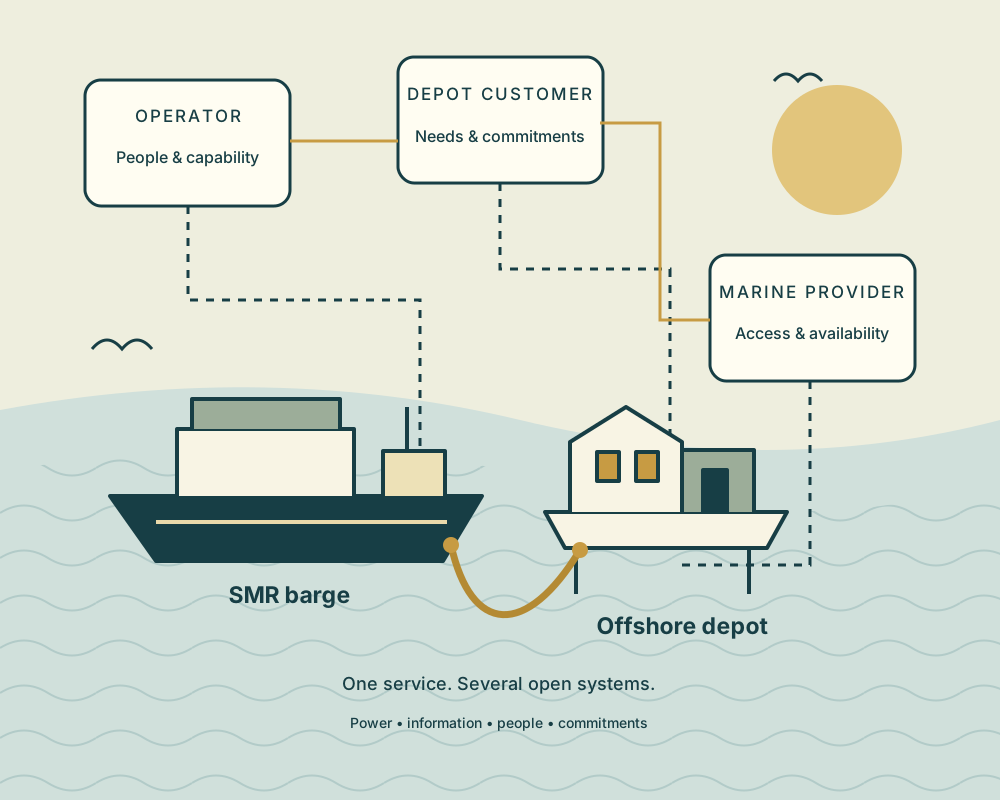
The question behind the pictures
First, make one or another open-system method understandable in this familiar setting. From there, explore what it helps us define: a piece of work, a capability, a scope boundary, a resource or a service.
A formalisation that could actually derive useful project work would be the cream. These first attempts establish a few smaller things clearly.
Two local diagrams name the same handover. Identify that interface and see the composed graph.
From the open-graphs drawing.
Explore joining →Make the current and intended arrangement visible. Separate what stays, what changes and what is added.
From the BAU / TOM drawing.
Explore the comparison →Replace vague actor-shaped ports with explicit shared observations and resource allocations.
From the open-process drawing.
Explore the interfaces →Each page is based on one of Lawrence’s three 2022 GraphML attempts. It shows elements that hold up, or can be corrected directly. Unfinished claims are explained in the source notes, rather than drawn as if they worked.
The organisational part matters
The depot customer expresses a need. The operator offers a service. Designers and procurers coordinate a specification. A marine provider supplies access. These parties can retain their own internal workings while exposing an interface to others.
The early drawings use Sell, Design, Build, capabilities, customers and regulators. We keep that wider vocabulary visible and use the barge story to give it meaning.
No attempt needs to solve the whole project. A clear distinction can be a useful result.
Read the End, methods and sources →