Petri net → free (commutative) SMC → elementary WBS & schedules (toy: cliffside mountain refuge)
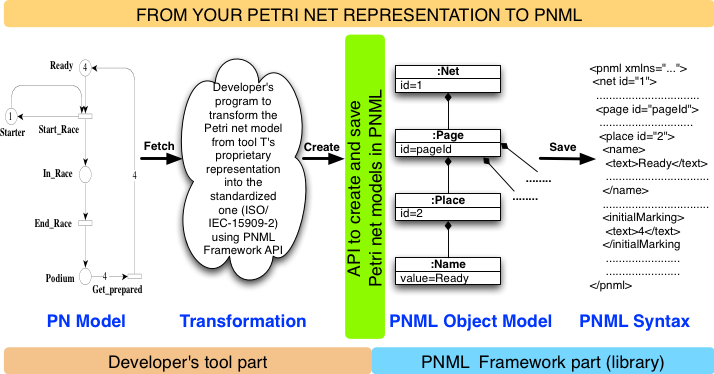
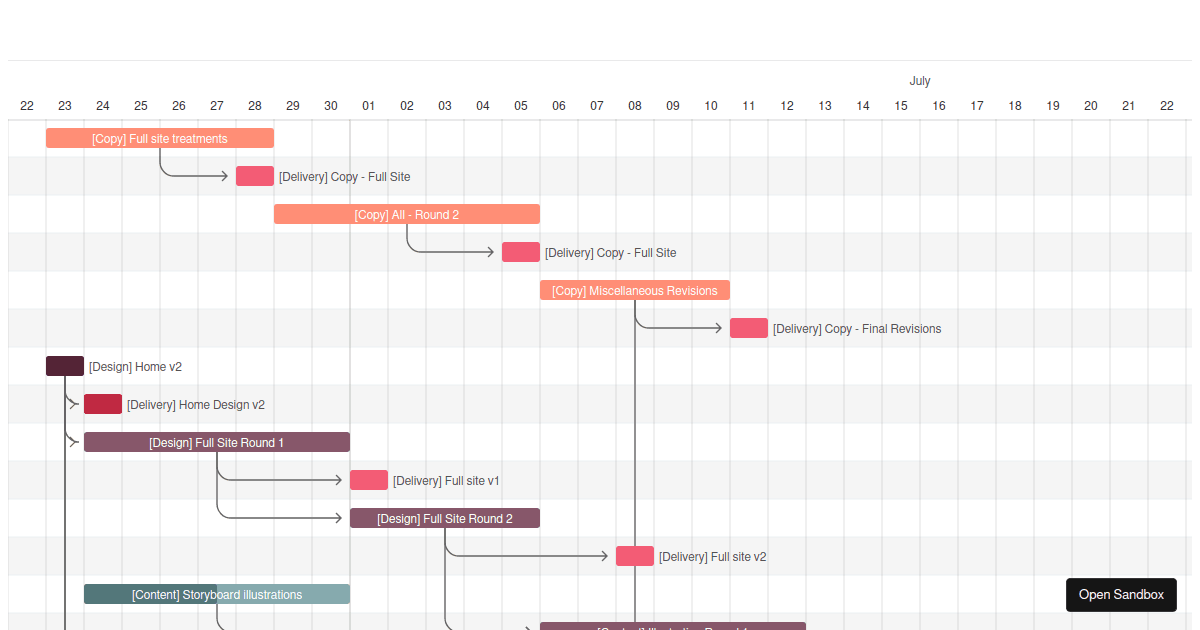
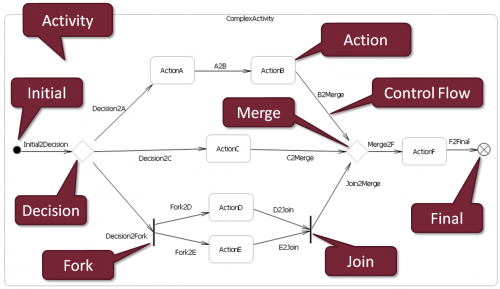
The Petri net below is the physical logic of a cliffside mountain refuge build (halfway up a cliff): tokens are “facts” (markings), transitions are “acts” (tasks). Under the “interchangeable markings/tokens” assumption, the clean categorical fit is the free commutative (hence symmetric) monoidal category presented by the net; “schedule options” are morphisms (reachability), while a WBS is a chosen operadic/parenthesized factorization of that morphism and a time schedule is a copresheaf / max-plus enrichment on the same causal skeleton.
Petri net for a toy “build a cliffside mountain refuge (halfway up a cliff)” project Goal not yet reached
Why “markings as schedule options” isn’t as odd as it sounds
In planning, one often wants not just “the list of actions” but the trace of state (which literals/facts carry causal responsibility for later steps). A Petri marking is exactly that kind of trace-friendly state, and a schedule can be seen as a path in the reachability graph: a sequence of markings connected by firings. Treating markings as interchangeable “for now” corresponds to working in the collective-token setting where only multiplicities matter (no token identities).
Controls & model choices (toy but principled)
SMC intuition in one breath
A Petri net freely generates a (very strict) symmetric/commutative monoidal category: objects are markings; morphisms are firing sequences; tensor is “doing in parallel”; composition is “doing in series”. This turns “project space” into a genuine algebra: schedule options are morphisms, WBS options are factorizations of morphisms, and “milestones” are just intermediate objects you choose to cut on.